close

Change Fatigue: what is it, and how can you manage it?

Victoria Cornell, Research Fellow, ARIIA

‘Continuous transformation is here to stay’ (Korn Ferry, 2024)
 

Constant change can lead to ‘change fatigue’, a condition characterised by lingering mental and physical tiredness associated with change. It’s a feeling that too much change is taking place and can lead to exhaustion, burnout and high staff turnover. In the aged care sector, we’re experiencing not one transformation, but many different changes on a near-constant basis, so change fatigue is a real and current issue. 
 

Who is impacted, and how?

Individuals

  • Exhaustion – dealing with multiple changes and uncertainty is emotionally, physically and mentally exhausting
  • Apathy – easier to ‘switch off’ than remain engaged
  • Ambivalence – why bother? Another change will come along to undo this last one…
  • Job Stress – additional workload, fear of job security
  • Frustration – at the process, at the lack of process, at the constant need to ‘keep up’.

Organisations

  • Strained relationships – between staff and managers, and between teams
  • Staff resistance – change in the status quo/ accepted processes and norms, change seems pointless/ nonsensical
  • Staff cynicism – belief that the change is driven by someone’s own agenda
  • Poor work culture – distrust of managers, distrust within teams.
     

How to minimise the effects of change fatigue

Individuals

  • Acknowledge your own discomfort, and what that looks like – potential additional workload, potential change in duties, potential change in hours, potential blame if the change does not go to plan
  • Ask questions – not understanding the reasons why change must happen causes angst
  • Remember your ‘why’ – remember ‘your story’ and values that brought you into working in the aged care sector
  • Self-care – prioritise all those things we know are important – good sleep, good food, exercise…and fun!

Organisations

  • Acknowledge staff discomfort - recognise that change is uncomfortable
  • Provide role clarity – hours, duties, expectations during change
  • Communicate – often, even during ambiguity, to retain trust
  • Co-design, identify champions – harness enthusiasm of some to lead others
  • Support staff – emotionally, professionally, logistically
  • Celebrate wins - after each project stage and at end, set aside time to recover, reset, and rebuild cohesion within the team.
     

Key Takeaway #1

Communication is critical. Communicate:

  • A lot – bad news is better than no news
  • About the need for change – is it regulatory? Financial? Board-driven?
  • About your intended process/ timeline
  • In various formats – team meetings, Town Halls, online options for remote staff
  • Two-way, not just top-down – give your staff genuine opportunity to be involved and ask questions
  • Impacts on staff – will there be:
  • Change in roles?
  • Change in hours?
  • Change in location?
     

Key Takeaway #2 

Be authentic and lead with integrity:

  • Self-Awareness - understand your own strengths, weaknesses, values, and emotional responses
  • Transparency – be open and honest with team members, create a sense of trust and understanding
  • Vulnerability - share your concerns, foster a sense of connection and empathy
  • Empathy – understand the perspectives and concerns of others
  • Respect diversity - appreciate the unique strengths and contributions of each team member

Remember…while constant change is inevitable, change fatigue doesn’t have to be. 

The views and opinions expressed in Knowledge Blogs are those of the authors and do not necessarily reflect those of ARIIA, Flinders University and/or the Australian Government Department of Health, Disability and Ageing.

To call or not to call: Enhancing care for Tasmania's ageing population

Dr Nicky Baker, Research Fellow, ARIIA

Over the last decade there has been a 32% increase in people aged 65 years and older in Australia. With the increase in ageing population, there has been an associated 5.9% increase in residential aged care admissions nationally, so that, today more than 200,000 Australians live in residential aged care (RAC)1. Of all the states and territories, Tasmania has the highest proportion (20%) of the population aged 65 years and older, and of these, 36.5% live in residential aged care2. People aged 65 years and older are more likely than younger age groups to be hospitalised, experience a longer length of stay (LOS), and have higher rate of readmission. Longer stays in hospital for older people leads to increased likelihood of hospital acquired conditions, cognitive and physical deconditioning, and functional decline3. Further, the financial and system cost of managing unnecessary or avoidable presentations creates additional burden to an already overstretched health system4. Residents in RAC homes are often frail with multiple comorbidities. The priority for medical management of these comorbidities is a regular maintenance control rather than cure5. However, this group can also be frequent users of emergency ambulance and hospital services. The ambulance travel and hospital admissions are stressful for residents and families, and are costly to the health system, yet are often avoidable6

The Aged Care Reform Unit (ACRU) of the Tasmania Health Service (THS) was launched in January 2023. They deliver programs to improve access and flow between RACs and hospitals for better resident outcomes and health system benefits. ACRU also facilitates the Tasmanian Aged Care Collaborative (TACC) whose overarching purpose is to support delivery of person-centred care for residents in their movement between RAC and hospitals.

'To call or not to call' for residential aged care nursing staff is a proof-of-concept initiative that involves face-to-face workshops, provision of evidence-based resources, and follow up support via peer support and mentoring to address these issues.  The collaboration is supported by THS’ ACRU, the Aged Care Quality and Safety Commission (ACQSC), Ambulance Tasmania, Primary Health Tasmania and Aged care Research and Industry Innovation Australia (ARIIA).

The aims of the evidence-based practice workshops to be held across Tasmania in the week of the 24 March 2025 are: to increase capacity of residential aged care ENs and RNs with early identification and response to deterioration in the older person; to engage the right clinical support in place; to strengthen clinical reasoning, decision making and communication skills; and to make direct referrals to supporting Tasmanian Health Services (THS). 

Evidence-based resources include the Aged Care Learning Information Solution (Alis) learning platform, the after-hours tool-kit for aged care, information on shared transfer of care. These will be used by workshop facilitators to support experiential learning through case studies developed by ACQSC on scenarios depicting an older person who has fallen, an older person experiencing clinical deterioration and multiple hospital presentations, and an older person requiring end-of-life care.

Evaluation of this collaboration and the initiative aims to provide the evidence to support other regional areas to address these national issues in a context- and state-specific way; to support the aged care workforce to provide care in place wherever possible; and to meet the preferences and needs of older people living in residential aged care.


1. Source: (Australian Government 2025) Aged Care Research and Reporting

2. Source: (Australian Institute of Health and Welfare 2024) AIHW

3. Palmer (2018) The Acute Care for Elders Unit Model of Care. Geriatrics

4. Chen et al. (2024) Preventing functional decline in hospitalized older adults in medical ward: a best practice implementation project  JBI

5. Hillen et al. (2017) Disease burden, comorbidity and geriatric syndromes in the Australian aged care population Australasian J Ageing

6. Gullick & Islam (2023) Exploring avoidable presentations from residential aged care facilities to the emergency department of a large regional Australian hospital Australian J Rural Health


*The views and opinions expressed in Knowledge Blogs are those of the authors and do not necessarily reflect those of ARIIA, Flinders University and/or the Australian Government Department of Health and Aged Care.

How can ARIIA support the workforce to implement evidence-based practice change in Australian Aged Care?

​Paul Ross, Librarian & Information Specialist, ARIIA
Dr Stephanie Champion, Research Fellow, ARIIA

Understanding what drives success in aged care is essential for implementing evidence-based improvements. The process of gathering information, evaluating its reliability, and determining its relevance to your specific needs can be complex and overwhelming! Where do you start? It requires a solid understanding of evidence-based practice and an understanding about how to put that into action. An evidence-based approach integrates the best available evidence, professional expertise, and knowledge of your specific care setting—whether residential or home-based—while also considering consumer perspectives and preferences. Fortunately for the sector, this is what ARIIA have expertise in, and our mandate is to build up these capabilities in the aged care workforce to drive practice change together.

The definition of "best" evidence may vary depending on what you are looking for and the type or quality of the available studies. While ‘systematic’ and ‘umbrella’ reviews are often regarded by researchers as the best sources, they may not always address your specific needs, contexts, or provide you with the practical information you’re looking for. In such cases, it becomes necessary to explore a wider range of sources and to learn the tricks to be able to critically assess the strengths and limitations of each source, to ensure you’re using evidence, that is fit for purpose.

Overall, the variables of evidence-based practice in aged care include:

  • Define the Problem: Clearly describe the issue you aim to address. Consider any contextual or organisational factors that may impact your approach, such as environmental constraints, budget limitations, timelines, and securing support from leadership.
  • Plan Your Approach: Identify and assess the quality of appropriate information sources, develop a plan for what change you are going to implement, and include methods to test its safety and effectiveness in addressing the original problem.
  • Implement and Evaluate: Follow your plan and implement the change and collect data on progress and process along the way so that you can tell if you are making a difference. Be prepared to revisit and update your plans periodically to ensure ongoing relevance and success.

To effectively use evidence and drive change, you will need specific skills, access to reliable and up-to-date evidence sources, and an overall research and implementation plan. To support this process, ARIIA offers various programs and services designed to guide you through the complexities of identifying evidence-based solutions for your practice needs, seeking to save you time and give you access to some of the most relevant sources related to aged care in Australia.

The Knowledge and Implementation Hub (KIH) provides a vast amount of free online information and resources to support the process of evidence-based practice, these include:

Finally, ARIIA provides the Innovation Capability Program offering the aged care workforce training, support and guidance needed to change the way things are done and build up their transferable skills. The program helps to develop solutions grounded in evidence, to ensure meaningful, impactful and sustainable results. The program supports you to define your problem, provides information and guidance into searching and using evidence, while enabling you to consider implementation barriers and plan for project success. Applications for a new round of training are now open for more information contact the ICP team.


*The views and opinions expressed in Knowledge Blogs are those of the authors and do not necessarily reflect those of ARIIA, Flinders University and/or the Australian Government Department of Health and Aged Care.

Strategies to recruit and retain volunteers in the aged care setting

Dr​ Meg Polacsek

Senior Research Fellow, ARIIA

Across Australia, volunteer numbers are in steady decline, with organisations facing significant short- and long-term challenges when it comes to recruiting and retaining formal volunteers (that is, people who willingly give their time for the common good and without financial gain). These include increased ‘red tape’, an uncertain financial climate and an apparent reluctance of volunteers to commit to regular, formal roles. In addition, the impact of COVID-19 on volunteering will be felt for years to come: while almost two thirds of volunteers were lost at the height of the pandemic, many of those who remained or returned are spending fewer hours in the role. 

With high workloads and limited resources, residential aged care providers often turn to volunteers to provide much-needed ‘non-critical’ social and emotional support to their residents. Compared to other healthcare settings, volunteers in residential aged care tend to form long and close relationships with residents. By offering important support functions that may otherwise not be delivered, aged care volunteers have a positive effect on residents’ quality of life and overall wellbeing. The resident/volunteer relationship is particularly important for older adults lacking the support of family or friends, and whose involvement in meaningful activities may depend on the support of volunteers.

It is for this reason then that aged care volunteers may have a specific motivation compared to, say, those in a hospital setting, where they often perform ‘meet and greet’ functions, help with hospitality services or serve as porters. 

So, how do we best go about recruiting and retaining volunteers? Free, easily accessible resources are available to inform volunteer recruitment and retention. However, few specifically address volunteering in aged care. 

Informed by our systematic review, we summarised a set of strategies to optimise volunteer recruitment and retention in residential aged care. Perhaps the most critical step is to identify their motivations. According to our review, volunteers were motivated most by the practical benefits and self-satisfaction of volunteering. They want to be matched to and trained in specific resident programs. And they are particularly interested in sharing of animals and animal-assisted therapy. 

When it comes to recruiting, aged care providers should present a broad concept of the volunteer role and function, to recruit diverse volunteers. Ideally (‘magic wand’ scenario), they should employ a volunteer coordinator to recruit, screen, train and support, supervise, and evaluate volunteers. Providers should also establish a management structure that accommodates the volunteer program within their overall care programs.

Tips for retaining volunteers include:

  • Signing a contract and/or statement of commitment that describe the volunteer’s tasks and expectations for performance, while creating realistic expectations
  • Matching volunteers to tasks that interest them and/or match their skills, and connecting them with other volunteers and residents
  • Providing appropriate training on the role, organisational mission, knowledge of residents' physical and cognitive status (eg dementia), skills and techniques to manage challenging situations
  • Using technology, such as email and social media networks, to communicate with volunteers.

Finally, aged care providers should ideally provide opportunities for volunteers to work in a range of roles, and a sense of 'ownership' by involving volunteers in role and task planning.

Optimising the vital volunteer resource takes money, time and effort, but not all of these strategies require significant costs. And with the right strategies in place, we should be able to achieve significant returns on our investment of time, effort and money, while improving residents’ quality of life.


*The views and opinions expressed in Knowledge Blogs are those of the authors and do not necessarily reflect those of ARIIA, Flinders University and/or the Australian Government Department of Health and Aged Care.

ARIIA at the Global Evidence Summit: Advancing knowledge and evidence for a better global future

Dr Janine Margarita Dizon

Research Fellow, ARIIA

In this blog, Dr Janine Margarita Dizon talks about the Global Evidence Summit and how ARIIA is strengthening the capability of the aged care workforce through research and innovation. Dr Dizon was successfully awarded the Academic Professional Development for Overseas Conference Funding by the College of Nursing and Health Sciences at Flinders University to participate in the Summit.


Held in Prague in September 2024, the Global Evidence Summit promoted the use of research evidence in health, social care and policy decision-making. Key areas of focus included the United Nations sustainable development agenda; research integrity making evidence accessible; the power of synergy in evidence synthesis and synthesis products; evidence translation and implementation; advocating for greater evidence communication and use of evidence; and global evidence to local impact. 


Discussions focused on challenging and complex issues prominent in the global landscape such as health and social inequities; misinformation; gaps between evidence, practice and policy; and the misuse of technological advancements. 


The rapid advancements transforming what once seemed impossible, such as the use of artificial intelligence (AI) in evidence synthesis, were interesting topics of discussion. While AI can accelerate progress, it lacks the intuition and nuanced understanding that human judgment offers. In fields such as healthcare and aged care, this can result in suboptimal or potentially risky decisions. Hence, robust methodologies, careful regulation, ethical considerations, and a balanced approach are essential for its responsible use.


Participants at the Summit were encouraged to network, attend multidisciplinary workshops, and engage with leaders to enhance the use of reliable evidence in addressing current challenges. The Summit also strongly encouraged collaboration between different organisations and sectors, underlining the significance of interdisciplinary dialogue in evidence production and application.  


The Summit highlighted the crucial role evidence plays in health, social care and policy decision-making, as well as in aged care. Evidence helps ensure that care provided to older adults is based on the best available knowledge, improving outcomes for both individuals and the wider healthcare system. As the leader of the positive transformation of aged care across Australia,  ARIIA was represented in this international gathering of organisations, researchers and diverse stakeholders who share the mission of improving lives by using evidence to guide research and practice. 


At the Summit, Dr Dizon outlined ARIIA’s highly regarded Innovator Training Program (now Innovation Capability Program (ICP) and Knowledge and Implementation Hub (the Hub). The ICP provides the workforce with skills and tools to use the evidence that is available, and the Hub provides trustworthy, evidence-based and freely accessible information tailored to aged care workers, service providers, older Australians and their families. Of particular value to users, the Hub provides access to evidence and resources on topics identified by those working in the sector as high-priority issues. The ICP and the Hub work together to support knowledge transfer in aged care in Australia. 


ARIIA continues to shape the future of aged care by creating purposeful and significant impact, not just within Australia but also on a global level.

Searching for aged care information online – database sources

​Paul Ross

Librarian & Information Specialist, ARIIA

Aged care is complex, and it's essential to draw on a wide range of evidence to ensure the delivery of high-quality care. An evidence-based approach combines the best available research with professional expertise while considering consumer preferences and values to guide and deliver effective care. While we discussed other approaches in our previous blogs, this post explores bibliographic databases and how they can empower you to find trusted, evidence-based information. If the concept of finding evidence is new to you, try out our mini course on ‘What is evidence and how can I find it?’. 

Bibliographic databases are digital collections that provide access to a wide range of literature, including books, journal articles, conference papers, and reports. While many databases require a subscription or are available through libraries and educational institutions, some allow free searching and provide links to either articles for a cost or open-access (free) content. This makes it easier for users to find and access relevant research, whether through subscription services or freely available sources. Several databases are available for evidence into ageing and provide the ability to set up reminders to your email of new content added in your field of interest. Databases also enable you to gather a wide amount of information related to your inquiry and can be limited by date to manage and screen the results.

Most databases allow you to search using free-text (keywords) or thesaurus terms (a specialised vocabulary unique to each database). Start by compiling a list of key terms related to your inquiry. You can do this by finding relevant articles online and extracting terms or by using an AI tool to generate potential keywords. From this list, you can build a basic search. Many databases provide help sections to guide you through this process (some require you to combine terms into ‘search strings’ or use them in specific ways).

Once you have your search results, you can screen them for relevance and refine your results using system tools to filter by language, date, country or context, or publication type. Most databases also allow you to download citation lists in various formats for easier management outside the database. Additionally, they should indicate whether the full text of an article is freely available or if access requires a fee.

Pro-tip: Systematic reviews can be a valuable source of keywords. These reviews, often available in open-access articles, typically include detailed appendices with the search terms and strategies. You can leverage these terms to build or refine your own searches in the same database.

Pro-tip: Standard searches can yield a lot of irrelevant information, which requires extensive reading. To streamline this, use pre-existing search filters developed by librarians and researchers. These filters are designed to gather the most relevant information on specific topics, saving you time and effort in constructing searches from scratch.

Pro-tip: Finding evidence efficiently depends on both time and expertise. That's why we've developed our aged care search collection to provide quick access to relevant information using the PubMed database and other online sources. This collection also includes guidance on how to create or adjust your own searches.

Searching databases doesn’t have to be overwhelming. They can give you access to valuable evidence-based information that isn’t always available through general online searches. By combining database searches with additional online research and links to key organisations, you can ensure a comprehensive review of all relevant sources to address your inquiry.

This is our final blog in our series into searching for aged care information online. To visit our previous blogs on the subject of searching online, check out our introduction, search sources and organisation sources blogs.


*The views and opinions expressed in Knowledge Blogs are those of the authors and do not necessarily reflect those of ARIIA, Flinders University and/or the Australian Government Department of Health and Aged Care.

​​​Searching for aged care information online – organisation sources​​

​Paul Ross

Librarian & Information Specialist, ARIIA

Searching online allows individuals to quickly access a vast array of information, resources, and services from around the world. As noted in previous blogs, this can include using search engines to connect with organisations, academic sources and governmental data. However, relying solely on search engines can lead to "information overload." Breaking your search into different approaches enables you to manage the information into specific groups, preventing information overload.

"Grey literature" describes research and information that has not undergone a formal peer-reviewed publication process. Anything outside this commercially published domain is considered as a "grey" area and is therefore classified as 'grey literature' which can include various types of content, from videos to policy documents, toolkits to blogs, and more.

Searching for grey literature should be conducted using a triangulated, three-point approach:

  1. Initial Search within a Search Engine: Start by using a search engine to get a clear idea of what you are looking for and how your subject is described in the literature. Then, conduct a more focused search by limiting your search engine results to .ORG (organizational). Note the organization names that come up and bookmark these for further searching.
  2. Use Lists of Relevant Organizations: Utilize lists of organizations in your area of interest, such as those provided by ARIIA (Organisations / Resources), PalliAged, and the Australian Government.
  3. Search Within Organizations: Once you have a list of relevant organizations from your web searches and lists, look for either a resources or publications section on their websites. Use their site search function if available, though note that not all search functions are equal, and some may not find what you are looking for.

Pro-tip: To double-check an organization's site, use Google Advanced Search. In the “site or domain” section, enter the organization’s web address along with the terms you are looking for. Google will search the entire organization’s site, potentially finding information their internal search function may have missed.

By using a triangulated approach to search for grey literature from organizational sites, you can ensure a broad selection of sources beyond just an online search using a search engine. It is also recommended to bookmark any organizations you find, saving you time in the future and helping you build your own collection of knowledge. Since grey literature is continuously produced, visiting your library or academic specialist centres, especially those with special collections in your field of interest, can be beneficial.

Pro-tip: Connect with professionals in your field and ask them what sources of information they use.

In our final blog, we will complete the overall picture of searching online by looking into searching for information using online databases. To visit our previous blogs on the subject of searching online, check out our introduction and search sources blogs.

*The views and opinions expressed in Knowledge Blogs are those of the authors and do not necessarily reflect those of ARIIA, Flinders University and/or the Australian Government Department of Health and Aged Care.

​​Asia Pacific Aged Care Hub (APACH): Strengthening Aged Care Across the Region

APACH Group

​​The Asia Pacific Aged Care Hub (APACH) is a capacity building initiative aimed at improving aged care across the Asia Pacific region, through a collaboration between Aged Care Research and Industry Innovation Australia (ARIIA), Flinders University College of Business, Government, and Law and the Caring Futures Institute, with funding support from the Department of Foreign Affairs and Trade. APACH brings together experts, practitioners, and policymakers to share insights, best practices, and learnings.

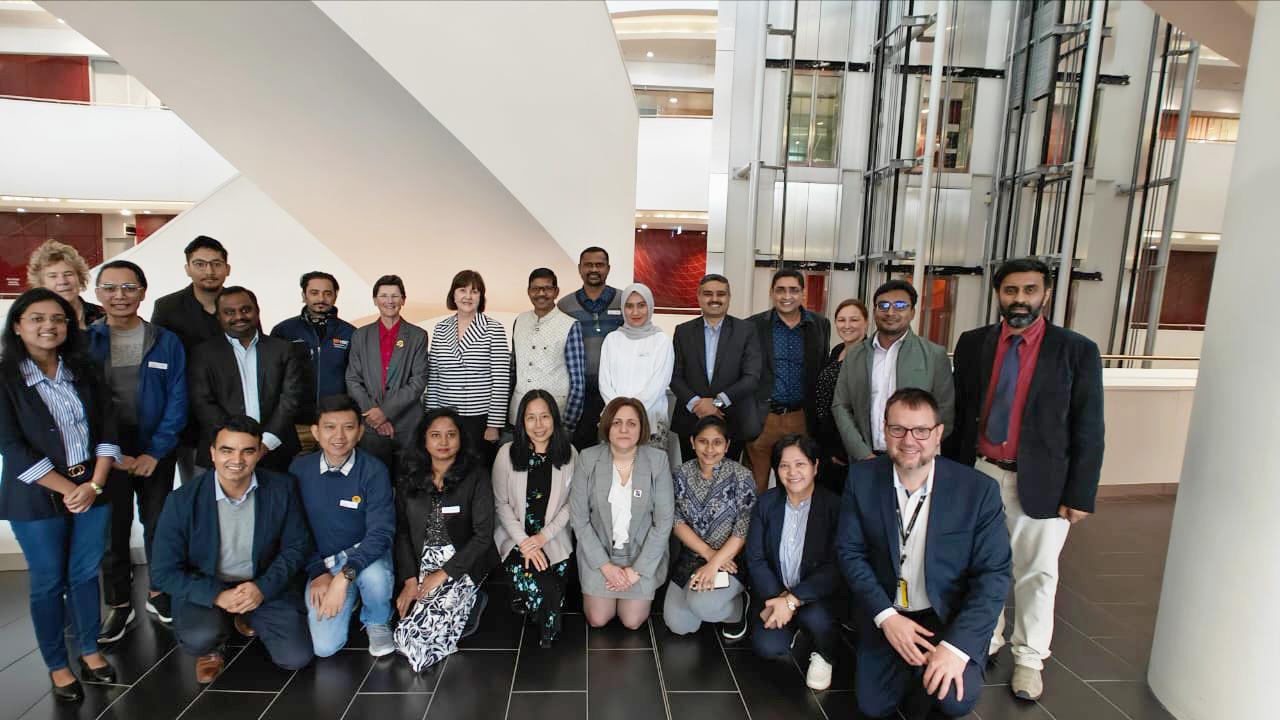
​During August and September 2023, APACH hosted a group of 15 aged care specialists from countries including India, Nepal, Malaysia, Indonesia, Bangladesh, and the Philippines. These experts participated in workshops, guest lectures, think-tank sessions, and industry visits to aged care homes and government health departments across Australia.

​Over two weeks, APACH fellows experienced Australian models of best practice in aged care firsthand. They learned about workforce capability requirements and the adoption of technology based on evidence-based practices from the Australian context. The commonality across all regions is that older people desire relationship-based, person-centered care. APACH aims to enhance this approach by sharing successful strategies and fostering regional collaboration.

​There is a focus on building networks of influence and developing communication and collaboration skills to build partnerships across multiple sectors and countries. By sharing knowledge and understanding, APACH contributes to better care outcomes for older adults.

​Building on the knowledge already shared, the APACH International Policy Forum was hosted at Ramaiah Medical College in Bangalore, India, on the 16th and 17th of May, 2024.

​The program highlights included keynote addresses by renowned experts, interactive workshops, poster presentations, engaging panel discussions, and networking opportunities between students, researchers, professionals, academics, and policymakers in the aged care sector. It provided a platform for showcasing research, projects, and innovations in aged care and contributed to the development of the aged care sector in the Asia Pacific region through knowledge sharing and collaboration.

​By bringing together experts from diverse backgrounds to share, learn and innovate, APACH aims to elevate aged care standards and create a brighter future for older adults across the Asia Pacific.

​To learn more, please visit the ARIIA website: https://www.ariia.org.au/asia-pacific-aged-care-hub-apach or the APACH 

*The views and opinions expressed in Knowledge Blogs are those of the authors and do not necessarily reflect those of ARIIA, Flinders University and/or the Australian Government Department of Health and Aged Care.

​​Voices of the Hub Users: Tuning into User Feedback​

​​Dr Janine Margarita Dizon​

​​Research Fellow (Knowledge & Implementation Hub)
Aged Care Research & Industry Innovation Australia, Flinders University

​​The Knowledge and Implementation Hub (the Hub) formed a User Reference Group (URG) to understand how its users access and use information, as well as provide feedback on improving the Hub. URG members represented user groups including aged care providers, allied health professionals, nurses, care workers, older people and their families/carers. Two online meetings were held in 2023.

​The conversations in our first meeting were on these three key themes: sources of information, accessing online information, and challenges and enablers in accessing and using information.

​We found URG members search various information sources, including the Internet, social media platforms, traditional (paper-based) and training sessions. Web-based sources included search engines (Google) and websites of trusted organisations (i.e., Dementia Training Australia). When brief information is required, some URG members prefer social media platforms (i.e., Facebook), with textbooks, professional development programs or training/education sessions, and personal communication with supervisors or leaders being other information sources. Managers, Allied Health professionals and nurses working in facilities access online information using computers or laptops. Community and care workers use their mobile phones to access online information.

​Challenges in accessing online information sources were also discussed. We found that an overwhelming choice of available information, poor/unstable Internet connections, and database subscriptions are common barriers to access. At point-of-care, availability of the supervisor for consultation and the limited to a lack of practical guidance on 'how to do the work' were seen as challenges, especially in remote care settings. These challenges, if addressed, can turn into enablers.

​We discussed three key themes in our second meeting: the Hubs positive features, interactive challenges and recommendations for improvement.

​URG members liked the Hub's appearance, with a clean, clear webpage structure that conveys positive ageing in featured imagery. The Hub is perceived as an excellent source of evidence-based information about Australian aged care, considering the complexity of the work without being prescriptive. It has a diverse collection of credible resources specific to the different roles of the aged care worker. Members also reported the Hub as having a user-friendly interface (navigation and information flow) and can be accessed using different device types (i.e., desktops, tablets and mobile phones). However, usability and navigation of pages can be quite challenging if a person is not used to the structure of the Hub.

​Improving the Hub user experience requires tailoring the content to the setting and practice for aged care workers' specific role in providing care. URG members recommended interactive toolkits, outcome measures lists, curation of commonly asked questions (and their answers) and improvements to search and functionality.

​Our URG members are valued contributors, who continually help us improve the Hub through their feedback. We are reviewing the Hub, its relationship with the wider ARIIA organisation and its stakeholders, and the improvements to be prioritised. We aim to give our users the best information and user experience suited to their needs.

*The views and opinions expressed in Knowledge Blogs are those of the authors and do not necessarily reflect those of ARIIA, Flinders University and/or the Australian Government Department of Health and Aged Care.

Exploring the nexus of aged care and digital reforms: Navigating challenges and seizing opportunities

Dr Priyanka Vandersman

Senior Research Fellow, ELDAC Project
Member of Research Centre for Palliative Care, Death, and Dying, Flinders University​

​​Globally, digital transformation has been sweeping through healthcare in recent years and Australia’s health and social care landscape is also undergoing rapid digitalisation. The Australian Government's National Digital Health Strategy 2023-2028, [1] along with its corresponding Delivery Roadmap, [2] outlines several key initiatives aimed at fostering a digitally empowered care environment within aged care. Significant systemic and policy-level shifts including the Aged Care digital transformation agenda, the national interoperability plan, and the integration of My Health Records into aged care clinical systems are driving a digitally enabled aged care environment. 

​However, this systemic upliftment of digital infrastructure and systems is unfolding against the backdrop of a rapidly evolving care and regulatory landscape. The recommendations from the Royal Commission into Aged Care 2020 have ushered in significant changes to the aged care sector, including the revision of the Aged Care Act of 1997, the strengthening of Aged Care Quality Standards, and the introduction of additional mandatory reporting requirements. Simultaneous transformation of the digital, care, and regulatory realms presents challenges for the sector in keeping pace with the rapid changes. 

​The latest Report on the digital maturity of aged and community care [3] highlights the ongoing need to enhance the digital maturity of the sector and identifies opportunities for innovation and improving staff's digital readiness. Amidst these changes, it is imperative to remember that the intent of changes both during and arising from the changes in the digital and regulatory spheres, is quality care for clients and residents. As a sector, we need to look at how we can optimize innovations that align with regulatory changes, and which alleviate current and future challenges. 

​At the core of digitally connected care lies quality data. While a considerable portion of the aged care workforce utilizes digital approaches for data collection, entry, or use, there is still much to explore in terms of data integration and transformation to support care. Changes are underway in the aged care data landscape with the adoption of Fast Healthcare Interoperability Resources (FHIR) and the development of the National Aged Care Minimum Dataset [METEOR]. [4] What is needed are innovative solutions that are not only effective today but also future-ready, designed to facilitate the sector in providing high-quality care by harnessing the power of technology to meet upcoming regulatory and reporting requirements. 

​Developing digital solutions must address work practices in meaningful ways, consider the reporting requirements for services, and enable access to real-time data. The ELDAC project is looking at how to support palliative care and care at the end of life in the aged care sector. As part of this work, we have designed and tested a palliative care dashboard, that aligns with the pending revised Aged Care standards and with the definitions of the aged care minimum data set. By enabling IT providers to map, extend, and/or integrate their existing data capture, the dashboard offers care providers an evidence-based framework that uses their data to inform care delivery and service review and reporting. The dashboard showcases how the concurrent evolution of the digital and regulatory landscape can be leveraged to support innovation and outcomes in the sector. 

​To find out more about the ELDAC Digital Dashboard, please email eldac.project@flinders.edu.au 

*The views and opinions expressed in Knowledge Blogs are those of the authors and do not necessarily reflect those of ARIIA, Flinders University and/or the Australian Government Department of Health and Aged Care.

  1. ​Australian Digital Health Agency. National Digital Health Strategy 2023-2028 [Internet]. Canberra, ACT: Australian Digital Health Agency; 2023 [cited 2024 April 02]. Available from: https://www.digitalhealth.gov.au/national-digital-health-strategy 
  2. ​Australian Digital Health Agency. National Digital Health Strategy 2023-2028 Delivery Roadmap [Internet]. Canberra, ACT: Australian Digital Health Agency; 2023 [cited 2024 April 02]. Available from: https://www.digitalhealth.gov.au/national-digital-health-strategy/strategy-delivery-roadmap 
  3. ​Pearce F, Livingstone A, Gould G, Alexander G. Digital maturity in aged and community care: The current state and resources required [Internet]. Canberra, ACT: Aged Care Industry I.T. Company; 2023 [cited 2024 April 02]. Available from: https://www.aciitc.com.au/digital-maturity-in-aged-and-community-care/ 
  4. ​METEOR Metadata Online Registry. Aged Care National Minimum Data Set 2023-24 [Internet]. Canberra, ACT: Australian Institute of Health and Welfare; 2023 [cited 2024 March 23]. Available from: https://meteor.aihw.gov.au/content/774715 
Spacing Top
2
Spacing Bottom
2